We conduct policy-oriented applied and academic research to provide an independent, holistic, and pragmatic perspective on the current state, risks, and opportunities in the financial services sector. We identify key research areas through ongoing gap analysis and stakeholder engagement, focusing on issues of both local and global relevance. Our research work is funded by the EC Recovery and Resilience Mechanism Project No. 5.2.1.1.i.0/1/23/I/CFLA/001 “Strengthening Knowledge and Research Capacity in the Areas of Anti-Money Laundering, Financial Technologies, and Sector Analysis”.
We conduct policy-oriented applied and academic research to provide an independent, holistic, and pragmatic perspective on the current state, risks, and opportunities in the financial services sector. We identify key research areas through ongoing gap analysis and stakeholder engagement, focusing on issues of both local and global relevance.
Our research work is funded by the EC Recovery and Resilience Mechanism Project No. 5.2.1.1.i.0/1/23/I/CFLA/001 “Strengthening Knowledge and Research Capacity in the Areas of Anti-Money Laundering, Financial Technologies, and Sector Analysis”.
Five years since the Estonian 2nd pension pillar reform:
What have we learned?
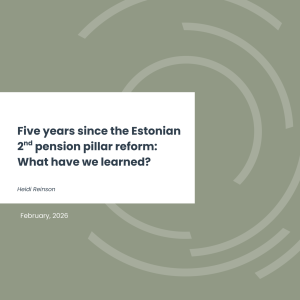
In 2021, Estonia reformed its 2nd pension pillar, allowing participants to exit the system and withdraw their accumulated savings before retirement. This expert report analyses the developments leading up to the reform and its impact over the five years since its implementation. The findings provide both cautionary insights and practical lessons for other countries considering similar changes.
The study author is BFC expert Heidi Reinson.
Mortgage Lending and Promoting Competition: Time to Shift Gears?
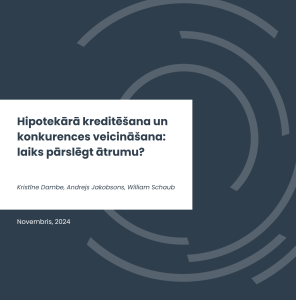 The study analyzes Latvia’s and global practices in mortgage lending market design and competition promotion, aiming to foster an evidence-based discussion and propose recommendations for Latvia’s mortgage lending market development.
The study authors are BFC economists and experts Kristīne Dambe, Andrejs Jakobsons, and William Schaub.
What Should Latvia’s Next National FinTech Strategy Look Like?
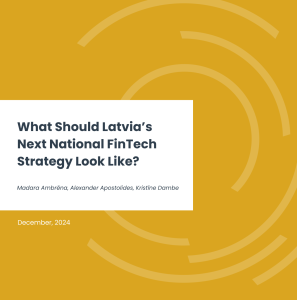 A study “What Should Latvia’s Next National FinTech Strategy Look Like?” was designed to support the process of writing Latvia’s new Fintech strategy with independent, evidence-based analysis. It examines the situation in the fintech industry in Latvia, various foreign approaches to planning the development of this field, and their success stories and failures are analyzed, as well as recommendations for the development direction of Latvia’s fintech sector are provided.
The authors of the study are economists and experts of the Baltic Finance Center Madara Ambrēna, Alexander Apostolides, and Kristīne Dambe.
Impact of Expanded Sanctions Against Russia and Belarus on Financial Service Provision in the Baltics: A Business Perspective
This specialized expertise report examines the impact of the European Union’s expanded sanctions against Russia and Belarus on the availability of financial services for businesses in Estonia, Latvia, and Lithuania. The sanctions were introduced following Russia’s full-scale invasion of Ukraine in February 2022.
The authors of the study are economists and experts of the Baltic Finance Center Alexander Apostolides, Inga Mukāne, and Robin Poynder.